A good voice recording is invisible. Nobody notices the room, the mic or the edit; they just hear a person talking to them. Getting there takes a quiet room, the right microphone and someone on the other side of the glass who listens closely. Here is how voice-over and dubbing work at Ponx Studios in Yerevan, and what they cost.
Quick answer
- What we record: voice-over for ads and videos, ADR and dubbing for film, audiobooks and narration, in Armenian, Russian and English.
- Price: ֏12.000 an hour with a sound engineer, or ֏8.000 an hour on your own. See all prices.
- Editing for film: dialogue editing and syncing start at ֏30.000 per 10 minutes of picture.
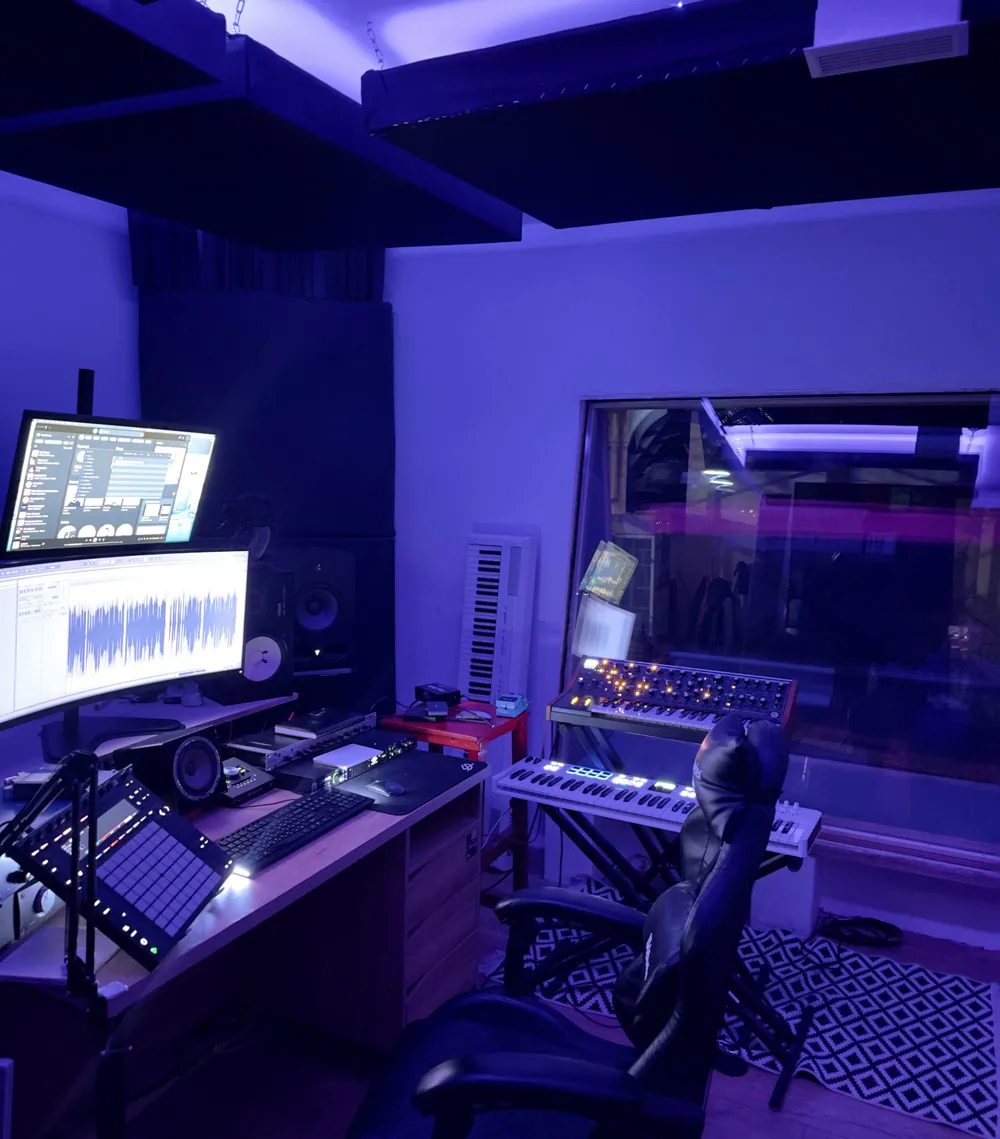
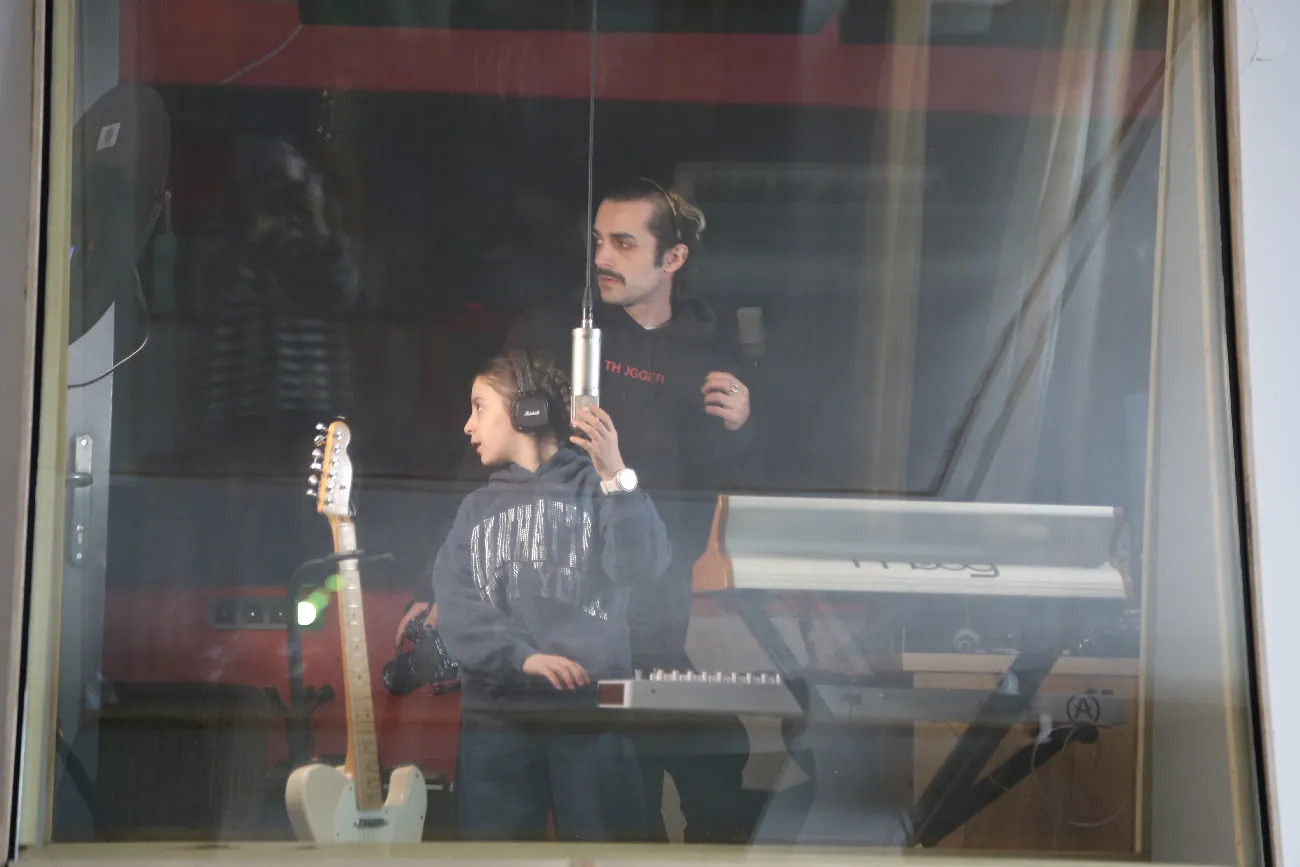
- Where: a soundproof 60 m² live room and a 40 m² control room behind a large glass window, near the centre of Yerevan.
- How to book: use the booking form or WhatsApp.
Voice-over, ADR, dubbing: what is the difference?
Voice-over
A voice that is not on screen: the narrator of an ad, a documentary, an explainer video or a game. The voice actor reads from a script, and timing is usually flexible.
ADR
Automated dialogue replacement. The actor comes back after the shoot and re-records lines that were lost to wind, traffic or a noisy location. The new line has to match the lips on screen, so the actor watches the scene and repeats it until it fits.
Dubbing
The same idea, for a whole film or series in another language. A film shot in English can get an Armenian or Russian voice track, line by line, in sync with the picture.
Why the room matters more than the voice
A voice recording has nowhere to hide. There is no band to cover a fridge humming or a car outside. The live room at Ponx is soundproof and acoustically treated, so what the mic hears is the voice and nothing else. That saves hours later: clean takes need less editing and less noise reduction, and they sound natural.
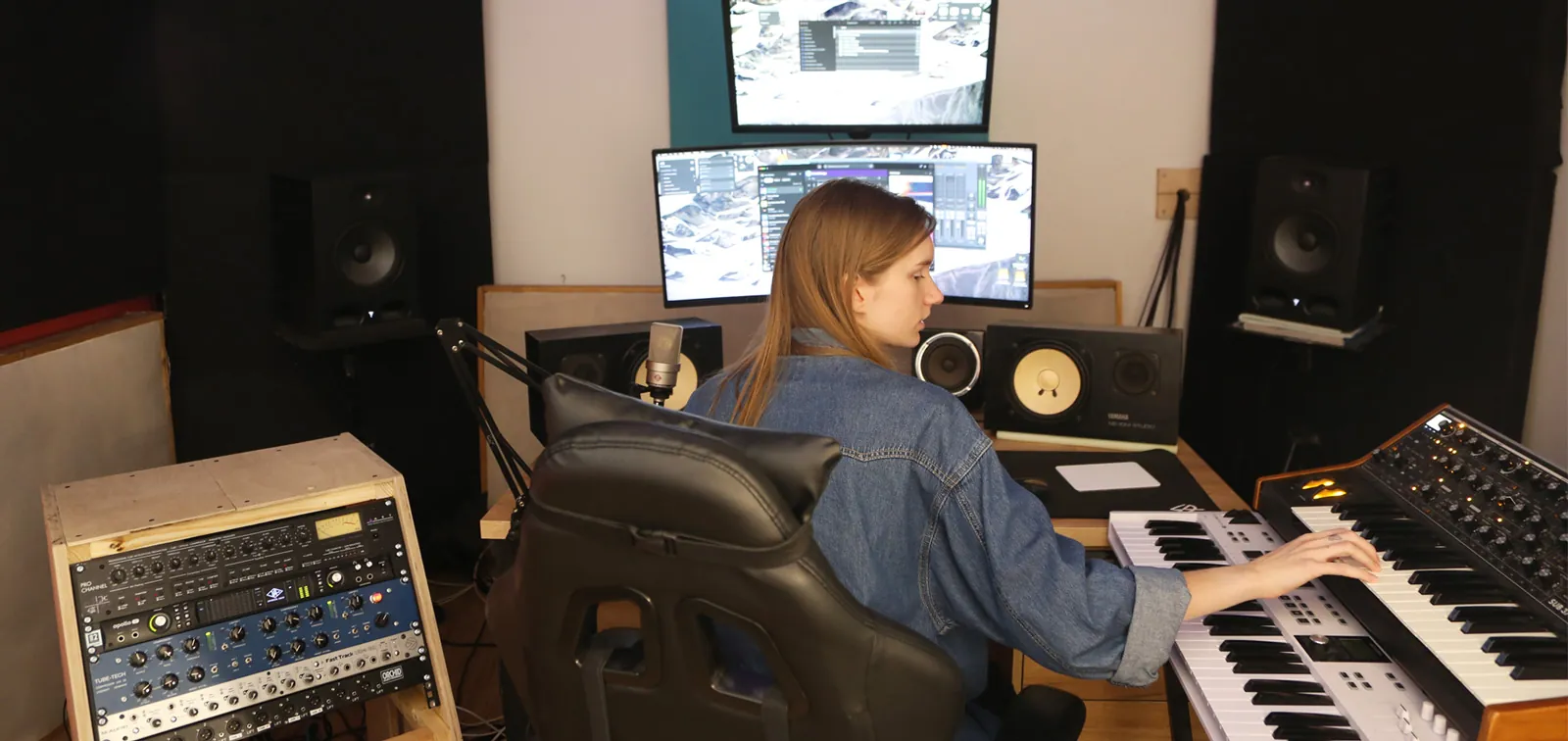
For voice we usually reach for the Neumann TLM 103, a clear, close studio mic, or the Shure SM7B and SM7dB for a warmer, broadcast sound. The signal goes through Universal Audio Apollo interfaces, and the Tube-Tech compressor is there when a voice needs to sit forward. See the full equipment list.
How a session works
- Before the day: send the script, the video if there is one, and a reference for the tone you want. Tell us the language and where the recording will be used.
- Setup: we choose the mic for the voice, set levels and record a short test.
- Recording: the voice actor reads in the live room; the engineer and the director listen in the control room and talk through the glass. We record several takes of each line.
- Choosing takes: we mark the best take of each line as we go, so nothing gets lost.
- Editing: breaths, clicks and mouth noise cleaned up, levels matched, files named the way your editor needs.
- Delivery: clean files ready for your video, film or audiobook.
You can direct the session yourself, bring your own director, or let our engineer guide the read. Our engineers come from film, music and voice-over, so they hear both the words and the sound.
What it costs
Most voice work is paid by the hour.
- With an engineer: ֏12.000 an hour. This is what most voice sessions need.
- On your own: ֏8.000 an hour, if you bring your own engineer.
- Dialogue editing and sync for film: from ֏30.000 per 10 minutes.
- Full sound design for a short film or ad: ֏200.000 per 30 minutes, with Foley, effects, dialogue editing and the final mix.
- Feature films: the Full Package 5.1 includes voice-over recording, score, sound design and a surround mix, agreed case by case.
A short ad script in one language often fits into a single hour. The same ad in Armenian, Russian and English takes longer, because each version needs its own takes and its own timing. Audiobooks and dubbing are planned as a series of sessions.
For details on film work, see Film Sound prices. For podcasts and long spoken shows, the podcast studio has its own setup with cameras.
How to get a great take
- Mark up the script. Underline the words that matter and note the pauses.
- Warm up. Ten minutes of humming and reading aloud before the session.
- Drink water, skip milk and coffee. Both make mouth noise worse.
- Wear soft clothes. Jackets and bracelets rustle on a sensitive mic.
- Time it first. If the script must fit 30 seconds, read it with a stopwatch at home.
Frequently asked
Can you record voice for a film shot somewhere else?
Yes. Send the scene and the lines; we record ADR or a new language track in sync with the picture, then edit and deliver the files.
Which languages can you record?
Armenian, Russian and English are the most common. The language is up to your voice actor; we take care of the sound.
Can you also mix the final film or video?
Yes. We do dialogue editing, sound design, Foley, music and the final mix, up to 5.1 surround. Tell us about your project.
Make something at Ponx
Recording, podcasts, mixing and residencies in Yerevan.